







You find a therapist who understands neurodivergent adults by looking past the “ADHD/autism specialty” label and asking concrete questions about how they adapt their approach, communicate, and define progress. The search itself can feel exhausting, especially if you have spent years translating yourself for professionals who quietly implied your brain was the problem. The right fit is findable, and you do not have to become an easier client first.
Why does finding a therapist who gets neurodivergent adults feel so hard?
What does “neurodivergent-affirming” actually mean in therapy?
What should I ask a therapist before I book a first session?
Where can I find neurodivergent therapists, including online?
How do I know if a therapist is actually a good fit for my brain?
How does Empower Counseling work with neurodivergent adults?
It feels hard because many neurodivergent adults have already had therapy experiences that left them more drained than when they arrived. You may have spent entire sessions explaining why standard advice like “just make a list” or “just set a timer” keeps failing, only to leave with the same advice and more shame. The fatigue is real, and it makes starting another search feel like a setup.
After enough of those experiences, many people quietly conclude that they are “difficult to help” or “not good at therapy.” That belief deserves questioning rather than acceptance. The problem was not your brain. The problem was an approach that assumed a different brain.
Many neurodivergent adults are late-diagnosed, self-identified, or still questioning. A formal diagnosis is not required to deserve an informed therapist. You do not need paperwork to know that certain environments, expectations, or communication styles consistently make your life harder.
Then there is the practical noise. Directories, specialty badges, insurance panels, and the pressure to pick someone fast can make the process feel like a research project you never asked for. According to Neurodivergent Therapists, a grassroots directory created by two neurodivergent women, finding a provider who actually understands neurodivergence often requires looking beyond surface-level labels. The Neurodivergent Practitioners directory similarly emphasizes lived-experience practitioners who understand being Autistic, ADHD, AuDHD, or otherwise neurodivergent. Forward Wellness Counseling notes that the healthcare industry has historically treated neurodivergence with a deficit model, which helps explain why so many past therapy experiences felt off.
Neurodivergent-affirming therapy treats neurodivergence as a difference to work with, not a disorder to correct. The term means the therapist starts from the assumption that your brain is not the problem, even when your distress is real and deserves attention. Affirming care adapts communication, sensory needs, pacing, and expectations rather than asking you to mask harder.
The deficit model has shaped mental health care for decades. According to Forward Wellness Counseling, the healthcare industry has historically treated non-neurotypical behaviors as disorders or limitations to be fixed. An affirming approach moves away from that. It asks what support would make your life more workable, not how to make you appear more typical.
Affirming care does not mean a therapist who never challenges you. It means challenges aimed at distress, trauma, and burnout, not at your identity or your natural ways of thinking and communicating. A therapist can help you examine a pattern without treating the pattern as evidence that you are broken.
Neurodivergent-affirming care also overlaps with trauma-aware and LGBTQ+-affirming care. Many readers hold more than one identity that has been pathologized, and a therapist who understands that overlap can make room for the whole picture. Kindred Therapy describes neurodiversity affirming therapy as one part of a broader approach that can include gender-affirming care and trauma work.
Ask concrete questions about how the therapist adapts their approach, because the answers matter more than the letters after a name. Useful questions include: How do you adapt sessions for sensory needs or processing differences? How do you handle it when a client does not do the homework? What does progress look like to you? Do you work with late-diagnosed or self-identified clients?
These questions are not rude or high-maintenance. They are a reasonable way to find out whether a therapist has thought carefully about working with neurodivergent adults rather than simply adding a specialty tag to a profile. A therapist who gets defensive or vague may be telling you something useful.
A short consultation call can be a low-stakes way to test fit before committing to a full session. Zencare notes that its listed providers offer free initial consultations, and many private practices do the same. You can use that call to ask one or two questions and notice how the therapist responds.
Fit can take a few sessions to assess, so one awkward session is not automatically a verdict. Kindred Therapy states that determining fit can take anywhere from three to five sessions. That timeline gives you room to notice patterns without pressuring yourself to decide everything in the first hour.
You can find neurodivergent therapists through grassroots directories built by neurodivergent clinicians, global practitioner directories, and general therapy platforms with identity filters. Each option works differently, and knowing those differences can save you time.
The Neurodivergent Therapists directory is a grassroots project created by two neurodivergent women to help neurodivergent clients find neurodivergent therapists. It pre-screens all listed providers to confirm licensure and alignment with its stated values, and it lists providers by US state, Canadian province or territory, and additional countries including Australia. The directory also maintains separate listings for PSYPACT licensed psychologists and Counseling Compact licensed counselors who can practice in multiple US states.
The Neurodivergent Practitioners directory describes itself as a global directory of neurodivergent practitioners, led by and for neurodivergent people. Its listing categories include advocacy, support groups, therapy, coaching, diagnostic services, counseling, education and tutoring, and training and workshops. This broader scope can be useful if you are looking for support beyond individual therapy.
General therapy platforms can also work. Zencare offers an identity filter for neurodivergent therapists and states that its listed providers have been vetted for offering high quality, clinically rigorous care. Directories vary in how they screen providers, from licensure and values alignment checks to self-listing, so some verification is on you. Asking your own questions before booking remains important.
It depends. A neurodivergent therapist can reduce the explaining burden, and many clients find that valuable, but shared identity does not guarantee understanding. The question is less about whether your therapist shares your diagnosis and more about whether they can work with how your brain actually operates.
Directories exist specifically to connect neurodivergent clients with lived-experience practitioners. The Neurodivergent Therapists directory was created by two neurodivergent women for exactly this purpose, and the Neurodivergent Practitioners directory states that its therapists are lived-experience practitioners who understand being Autistic, ADHD, AuDHD, or otherwise neurodivergent. For many clients, that shared experience means fewer sessions spent explaining basic realities.
Lived experience and professional training are different things. A neurodivergent therapist still needs clinical skill, and a neurotypical therapist can be genuinely affirming with the right training and humility. The best fit depends on your specific needs, your history with past therapists, and what you want therapy to feel like.
You assess fit over the first few sessions, not in a first-impression verdict. Real signals include feeling heard and respected, being able to ask for clarification, and noticing that the therapist adjusts when you say something is not working. Goals should sound like your life rather than a neurotypical benchmark.
Forward Wellness Counseling frames affirming care as support for people diagnosed or exploring diagnosis later in life, which means the therapist should be comfortable with uncertainty and self-identification. Kindred Therapy notes that the intake process can take one to three sessions, and fit can take three to five sessions to determine. That timeline is normal.
If a therapist is not working out, you are allowed to switch without a dramatic exit speech. Changing providers is common and not a failure. The goal is support that fits your brain, not loyalty to a provider who keeps missing the mark.
Empower Counseling offers Neurodivergent-Affirming Therapy that makes room for how a person thinks, communicates, processes sensory information, and moves through the world. The approach explores distress in the context of individual needs, relationships, expectations, and environments, and it can include support with masking, burnout, boundaries, identity, and past experiences.
Many members of the Empower team are diagnosed or self-identified as neurodivergent, including ADHD, autistic, or both. We bring that lived experience alongside professional experience and dedicated training to keep our care informed by current neurodivergent-affirming practices. We also recognize that your experience is your own. Shared identity is a starting point for curiosity, not an assumption that we already know you.
The goal is to work with your brain, not to fix neurodivergence or make appearing neurotypical the measure of progress. Therapy can address distress, trauma, and burnout while respecting your identity, needs, and ways of communicating. Goals should reflect what makes life more workable and meaningful for you.
A formal diagnosis is not required to begin exploring these experiences in therapy. Empower provides therapeutic support rather than a formal diagnostic evaluation. Appointments are available in person in Suwanee, Georgia, and online in Georgia. Start Here.
A specialty label alone does not tell you whether a therapist adapts their approach to how your brain works.
Neurodivergent-affirming therapy treats neurodivergence as a difference to work with, not a flaw to fix.
A formal diagnosis is not required to seek a therapist who understands neurodivergent adults.
Directories vary in how they screen providers, so asking your own questions before booking matters.
A therapist being neurodivergent themselves can reduce the explaining burden, but shared identity does not guarantee fit.
Fit is usually assessed over the first few sessions, and changing therapists is a normal, allowed choice.
Empower Counseling offers neurodivergent-affirming therapy in person in Suwanee and online in Georgia.
Neurodivergent Therapists Directory — date unknown
Neurodivergent Therapists, Coaches & Counsellors — date unknown
Neurodivergent Therapists in Pennsylvania — date unknown
Neurodivergent-Affirming Care — date unknown
Kindred Therapy LLC | Neurodiversity Affirming Therapy In PA — date unknown
This article is for education and isn’t a substitute for therapy or medical care. If you’re in crisis, call or text 988.
More on Neurodivergent life
Neurodivergent-affirming care, no formal diagnosis required.
how we helpstart here 





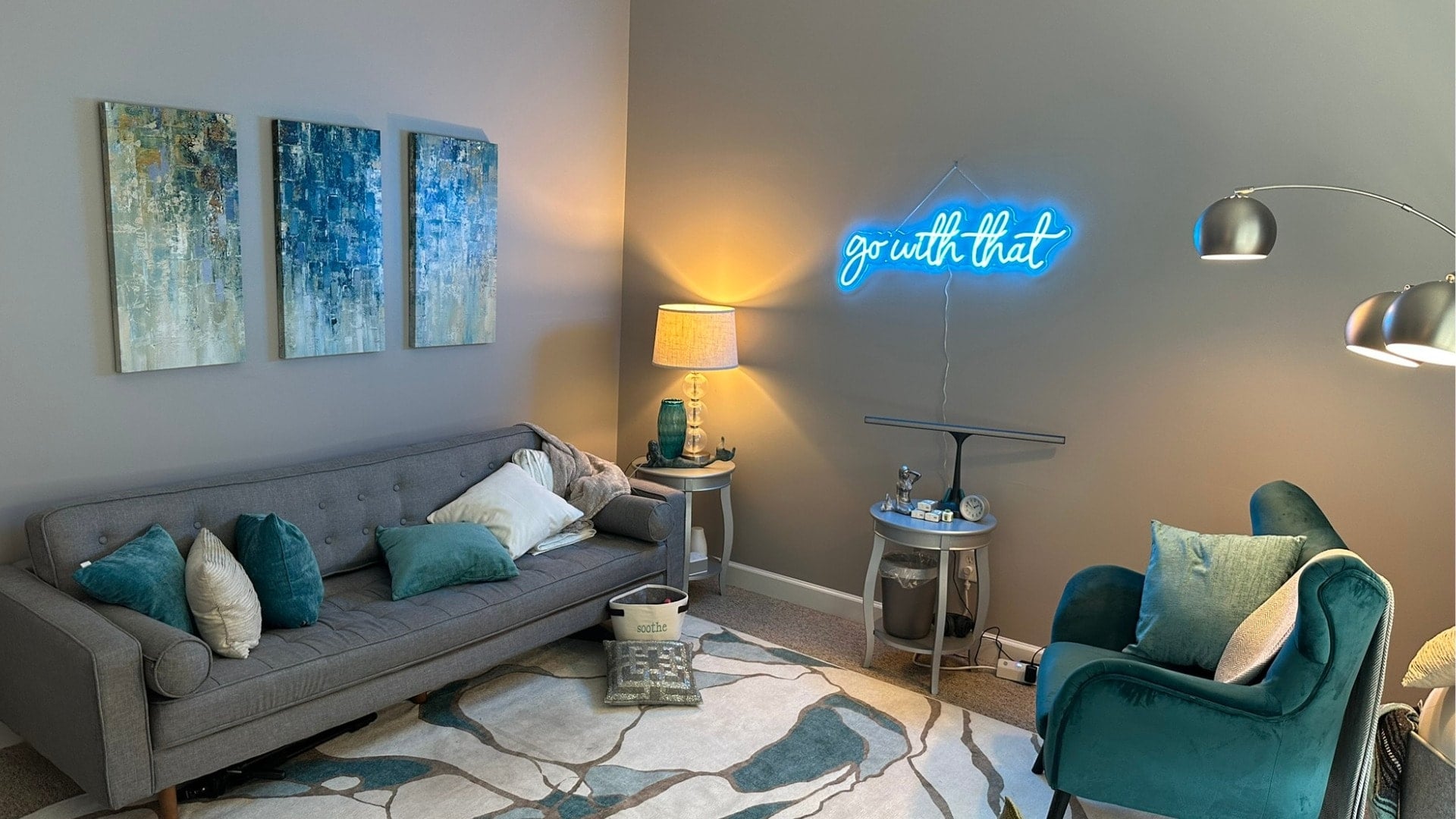


Empower Counseling Center offers relational, pattern-level therapy for smart, sensitive overachievers who feel stuck, burned out, or like something always seems to get in the way. Our care is neurodivergent, LGBTQ+, and chronic-illness affirming, with trauma therapy, anxiety counseling, and EMDR therapy available with our certified and trained therapists.
Areas we serve: In person in Suwanee, serving Gwinnett County and the North Atlanta area, and online across Georgia.
Empower Counseling Center, LLC
4411 Suwanee Dam Rd, #450 | Suwanee, GA 30024
Call or Text: 770-685-6790 | Fax: 770-727-8786 | Email: hello@empowercounseling.net
©2026 empower counseling center llc. all rights reserved.